
For the past few years, I’ve been increasingly drawn to sustainable practices. This applies both in my daily life and in my quilting work. After two decades as a quilter, I’ve noticed that my habits have naturally shifted toward more mindful, intentional-making. This series is my way of exploring that evolution and sharing what sustainability looks like through the lens of quilting.
Recently, while trimming fused fabric for a set of bags, I caught myself pausing. Thin strips of fabric and fusible fleece were piling up beside me. Instead of tossing them, I wondered—How could I use these? That question has become a familiar refrain in my studio.
I’ve always saved fabric scraps and selvedge strips for patchwork projects. Two full drawers of my studio storage are dedicated to these bits and pieces, waiting for their next life. I came across an article discussing the depletion of natural resources. It also covered the mounting pressure on the luxury fashion industry. I wasn’t surprised by these issues. The booming resale market—Poshmark and similar platforms—only reinforces the urgency of rethinking how we produce, consume, and reuse textiles.
The article pointed to a growing expectation that luxury brands adopt the circular economy model. I first encountered this concept, along with the 9R Framework, a few years ago. It’s a structured way of thinking about resource use, waste reduction, and product life cycles. When I revisited it recently, Copilot’s AI engine offered a clear breakdown. It helped me reconnect the dots between circularity and my own quilting practice.
Below is the framework—a hierarchy of strategies designed to minimize waste and maximize reuse. As I continue this series, I’ll explore how each of these principles can be applied to quilting.
♻️ The 9R Framework of the Circular Economy
1. R0 – Refuse
Avoid materials or products that generate unnecessary waste.
2. R1 – Rethink
Reimagine products or systems to use resources more efficiently.
3. R2 – Reduce
Use fewer raw materials and less energy through thoughtful design and efficient processes.
🔧 Extending Product Lifespan
4. R3 – Reuse
Use items again for their original purpose—secondhand markets are a great example.
5. R4 – Repair
Fix what’s broken so it can continue to serve its purpose.
6. R5 – Refurbish
Restore older items to good condition, often with upgrades.
7. R6 – Remanufacture
Use components of discarded items to create new ones with the same function.
8. R7 – Repurpose
Transform materials into something entirely new.
🔄 Material Recovery
9. R8 – Recycle
Convert waste materials into secondary raw materials.
10. R9 – Recover
Extract energy or value from materials that can no longer be reused or recycled—truly the last resort.
This framework offers a powerful lens for thinking about quilting in a more sustainable way. In the next installment, I’ll explore how these principles appear in my studio. I will also explain how quilters can adopt them in practical and creative ways.
Resources
Gut, Samuel. “As Natural Resources Dwindle, Luxury Fashion Must Pursue Sustainability Says Square Management Study.” FashionNetwork, 11 Jan. 2026, www.fashionnetwork.com/news/As-natural-resources-dwindle-luxury-fashion-must-pursue-sustainability-says-square-management-study,1796514.html (fashionnetwork.com in Bing). The Fashion and Race Database® Weekly Digest, Business & Retail Section, 9–15 Jan. 2026, fashionandrace.org/database/weekly-digest-for-january-9-15-2026.
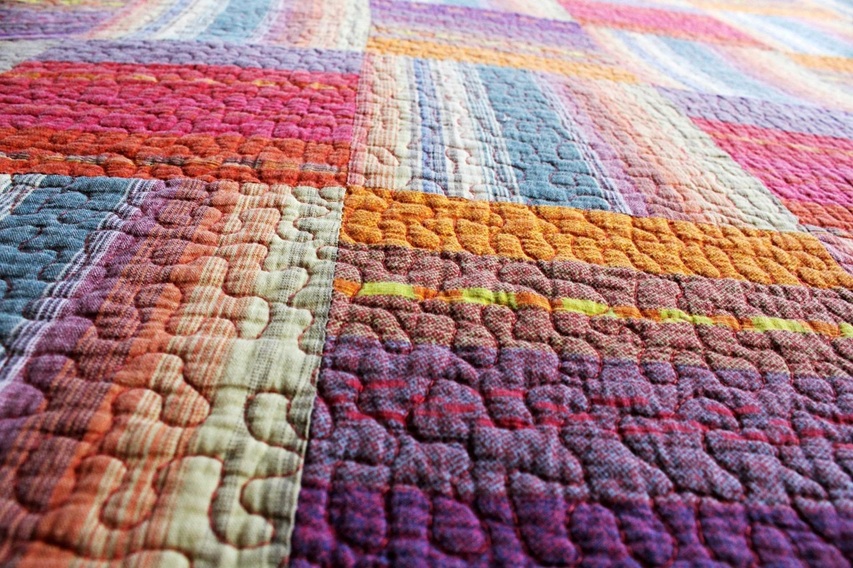
Image Credit: PublicDomainPictures. Quilted Background. Pixabay, 2013, https://pixabay.com/photos/quilted-background-quilted-164278/.
 angelaheathmakerstudio.com
Leave a comment